Blog
The Rise of Dummy Schools: A Billion-Dollar Industry Shaping Student Futures
24-02-2025
Compiled by #Team_PhloxEducon
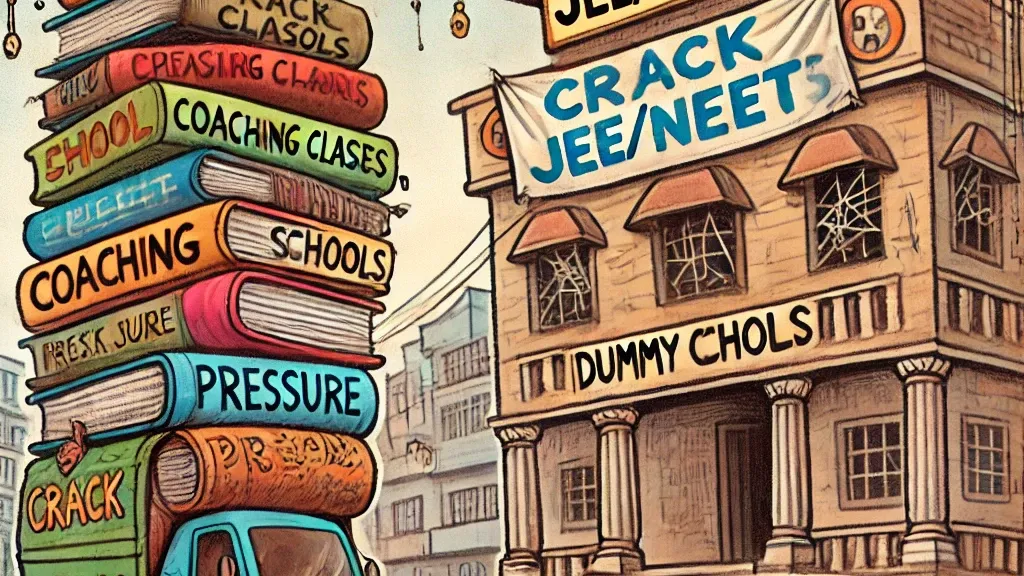
In recent years, the concept of "dummy schools" has gained widespread traction across India. These are schools where students enrol formally but do not attend regular classes. Instead, they dedicate their time entirely to coaching centres that prepare them for highly competitive entrance exams such as JEE and NEET. While this practice has been prevalent for some time, it has now evolved into a billion-dollar industry, raising serious concerns about the role of formal schooling in student development.
Why Did Dummy Schools Emerge?
- Increasing Competition: The growing difficulty of entrance exams like JEE and NEET has made students and parents desperate for every possible advantage. Coaching centres promise targeted preparation, leaving little time for conventional schooling.
- Inadequate School Preparation: Regular schools, despite their best efforts, often struggle to provide the level of specialized training needed for these competitive exams. The curriculum focuses on a broad range of subjects rather than the specific content required to excel in entrance tests.
- Parental Pressure and Career Aspirations: Many parents, driven by the dream of securing a prestigious career for their children, willingly bypass regular schooling in favour of intensive coaching.
- Flexibility and Reduced Burden: Enrolling in a dummy school reduces the pressure of attendance, assignments, and non-essential subjects, allowing students to dedicate their entire focus to cracking entrance exams.
The Challenges and Concerns
While this model has helped many students succeed in competitive exams, it comes with significant drawbacks:
- Compromised Holistic Development: Schools play a vital role in shaping a child's personality, social skills, and emotional intelligence. By skipping regular schooling, students miss out on essential life experiences.
- Questionable Legitimacy: Many dummy schools exist primarily to facilitate exam-focused study, violating affiliation norms and national education policies. As seen in CBSE’s recent press release, such schools can even lose their accreditation.
- Mental and Emotional Stress: The high-pressure environment of coaching institutes, coupled with a lack of extracurricular activities, can take a toll on students' mental health.
- Unequal Access to Quality Education: The rise of dummy schools and expensive coaching canters has widened the gap between students who can afford specialized training and those who cannot.
A Balanced Approach: Finding a Solution
Instead of banning dummy schools outright, policymakers, educators, and parents should work toward a system that integrates the best of both worlds.
- Revamping School Curriculum: Schools should align their syllabus with entrance exam patterns while ensuring a balanced education that includes problem-solving and conceptual learning.
- Introducing In-School Coaching: Schools can collaborate with reputed coaching institutes to provide structured preparation within the school framework, reducing the need for external coaching.
- Regulating Dummy Schools: Strict monitoring of school affiliations and surprise inspections, as seen in the recent CBSE action, can ensure compliance with national education standards.
- Promoting Holistic Development: Schools should emphasize overall personality growth, career counselling, and mental well-being alongside academic success.
- Parental Awareness Programs: Educating parents about alternative career paths and the risks of excessive academic pressure can help reduce the over-reliance on dummy schools.
Conclusion
The rise of dummy schools is a response to systemic flaws in our education system rather than just a parental choice. Instead of dismissing the practice outright, a solution-oriented approach that improves school education, regulates dummy institutions, and integrates coaching into the formal education structure is the need of the hour. A balanced model will ensure that students not only succeed in exams but also develop into well-rounded individuals prepared for diverse career opportunities.