

+91 96891 00451
connect@vikramdeshmukh.com
connect@vikramdeshmukh.com
Compiled By #Team_VikramDeshmukh&Consultants
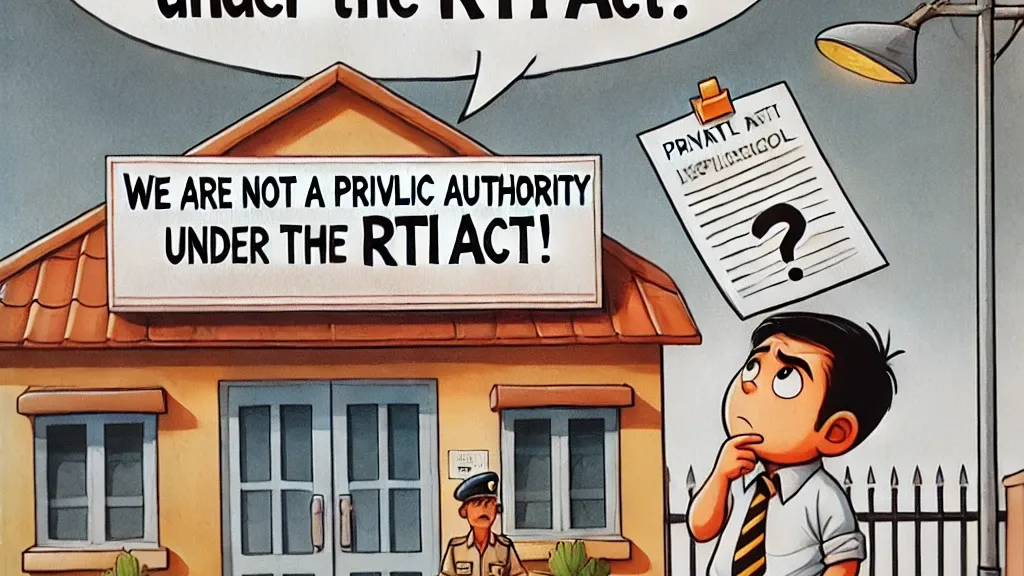
The Right to Information Act, 2005 (RTI Act) is an important law in India that aims to make government institutions more transparent and accountable. It allows citizens to access information about government functions, policies, and decisions. However, one of the common questions that arise is whether private unaided institutions, such as schools and colleges that do not receive government funding, are also covered under this Act.
To address this, we will examine the legal position based on key court judgments, particularly the Supreme Court’s ruling in D.A.V College Trust And Management Society And Others v. Director Of Public Instructions And Others (2019) and the Jammu & Kashmir High Court’s decision in Tyndale Biscoe School And Others v. Union Territory of J&K And Others (2022).
What is a Public Authority Under the RTI Act?
Under Section 2(h) of the RTI Act, a "public authority" is defined as:
The main question we are addressing is whether private schools and colleges, particularly those that do not receive significant financial assistance from the government, fall under this definition and are required to provide information under the RTI Act.
What Does the Supreme Court Say?
D.A.V College Trust Case (2019)
In this case, the Supreme Court ruled that any organization that is "substantially financed" by the government, whether directly or indirectly, is a public authority under the RTI Act. The key points from this judgment are:
However, private unaided institutions that do not receive such financial support from the government are not covered by the Act.
Tyndale Biscoe School Case (2022)
The Jammu & Kashmir High Court reaffirmed the principles set out in the D.A.V College Trust case. In this case, the court held that:
This judgment provided additional clarity on the subject and confirmed that private institutions that operate independently, without financial assistance from the government, are not required to comply with RTI requests.
What is Substantial Financing?
One of the most important aspects of these cases is understanding what "substantial financing" means. Courts have clarified that:
What Does This Mean for Private Unaided Institutions?
Based on these legal rulings, private unaided schools and colleges that do not receive government funding are not considered public authorities under the RTI Act. This has several implications:
Conclusion
The judiciary has provided a clear distinction regarding which institutions fall under the RTI Act. The Supreme Court’s ruling in the D.A.V College Trust case and the Jammu & Kashmir High Court’s ruling in the Tyndale Biscoe School case establish that only institutions that receive substantial financial assistance from the government are subject to the RTI Act. Private schools and colleges that operate without such funding remain outside the RTI framework.
This interpretation ensures that government-funded organizations remain transparent while private institutions retain their autonomy unless they receive considerable financial support from public funds. Thus, unless a private unaided institution is substantially funded by the government, it does not come under the purview of the RTI Act and is not required to disclose information under it.
© Copyright - 2026. All Rights Reserved - Vikram Deshmukh Consultants