

+91 96891 00451
connect@vikramdeshmukh.com
connect@vikramdeshmukh.com
Compiled by Vikram Deshmukh & Consultants OPC Pvt Ltd
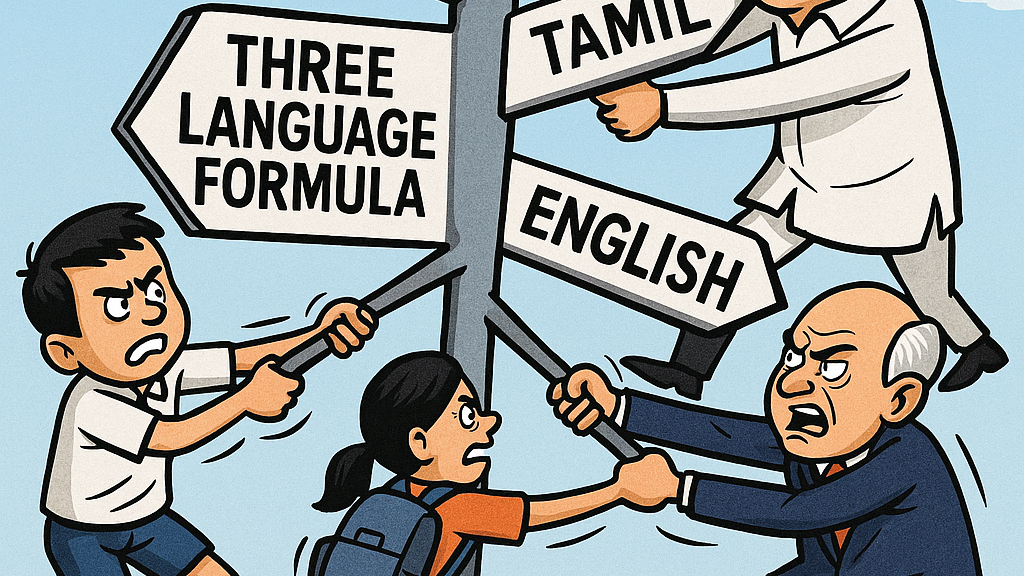
Language plays a crucial role in education and cognitive development. India, with its rich linguistic diversity, has always recognized the importance of multilingualism in education. Over the years, various National Education Policies (NEPs) have emphasized different approaches to language learning. The Three Language Formula (TLF) has been a consistent feature of these policies, evolving over time. The latest National Education Policy (NEP) 2020 brings a fresh perspective to language learning while maintaining the core principles of the Three Language Formula. However, its implementation, particularly in different states of India, has sparked various discussions and debates.
Evolution of Language Policy in Indian Education
1. National Policy on Education (1968)
The first National Education Policy (NPE) of 1968 introduced the Three Language Formula, which proposed that students should learn:
The policy aimed to promote national unity and linguistic harmony. However, resistance from some states, especially in the South, made its implementation challenging.
2. National Policy on Education (1986, Modified in 1992)
The 1986 policy, later modified in 1992, reaffirmed the importance of the Three Language Formula. It encouraged:
Despite this, many states did not fully implement the formula. Some states focused only on their regional language and English, avoiding Hindi due to political and cultural reasons.
NEP 2020 and Its Approach to Language Learning
The National Education Policy (NEP) 2020 has taken a more flexible and inclusive approach to language learning. It highlights the importance of multilingualism and emphasizes education in the mother tongue.
Key Features of NEP 2020 on Language Learning:
Response of Indian States to NEP 2020’s Language Policy
The implementation of the Three Language Formula under NEP 2020 has received mixed reactions from different states, particularly in South India, where language has historically been a sensitive issue.
Southern States’ Perspective:
Northern and Hindi-Speaking States’ Perspective:
Challenges in Implementation of the Language Policy
Conclusion
The Three Language Formula has been a central part of India's education system for decades, evolving through various National Education Policies. The NEP 2020 takes a more flexible, inclusive, and student-friendly approach by prioritizing mother tongue instruction while promoting multilingualism. However, its implementation remains a challenge due to regional language politics, teacher shortages, and parents' preference for English.
While some states embrace multilingualism, others resist due to historical and political reasons. Going forward, collaboration between the central and state governments will be crucial in ensuring that language learning policies benefit students without cultural or linguistic imposition.
NEP 2020’s approach to language learning aims to create a strong linguistic foundation while respecting India’s diversity. The success of its implementation will depend on regional adaptability, teacher training, and public acceptance.
© Copyright - 2026. All Rights Reserved - Vikram Deshmukh Consultants